
Y'all Don't Hate Men Enough for Me
Dr. Cerina Wanzer Fairfax was a dentist. She had cameras in her own home because she was afraid. This essay rides the haint of the American god — civic and domestic — that requires Black women's silence as its condition of worship.
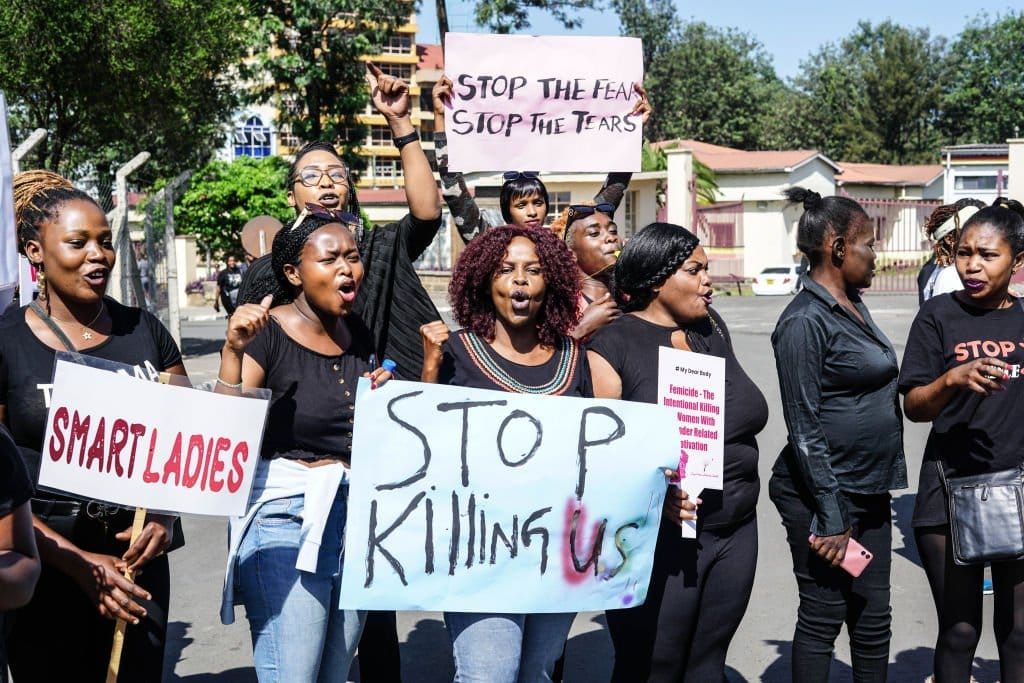
A Womanist Meditation on Being a "Separatist" in Case of Health
Dispatches from the margins, written in full
I. The Haint in the House
Dr. Cerina Wanzer Fairfax was a dentist. She graduated from VCU's School of Dentistry and was honored as their Outstanding Graduate of the Last Decade.[1] She ran her own practice. She was planning college trips for her two teenage children. A judge, in granting her primary custody, wrote that her children's resilience came down to what he described as "mother's grit."[2] She was the planner, the scheduler, the caretaker, the cook, the disciplinarian, the primary nurturer, and the primary earner — all while maintaining a dental practice. She had cameras installed in her own home because she was afraid.[3]
On April 16, 2026, shortly after midnight, her estranged husband shot her multiple times in the basement of their Annandale home. Then he went upstairs to the primary bedroom and shot himself. Their teenage children were in the house. Their son called 911.[4]
Within hours, Roland Martin posted photographs of Justin Fairfax in fraternity gear, smiling at events, surrounded by the architecture of prestige. He remembered him as a brother, a good man, someone with potential. He booked two Black male mental health experts for his show — not domestic violence specialists, not advocates for battered women — to discuss the man who pulled the trigger. The chyron on his broadcast flashed a statistic about Black men's suicide rates.[5] But this was not a story about suicide. This was a story about a man who murdered his wife. That statistic did not clarify the violence. It redirected it. It pulled the audience away from her death and into a narrative about his distress.
Meanwhile, Dr. Cerina Fairfax became a detail in the conversation. She was described as amazing, kind, a great dentist. The panel acknowledged that she did not deserve this. And then the conversation moved back to him — his pain, his loss, his fall from grace, what this means for Black men.[6]
I am writing this essay because I am tired of watching Black women become details in the stories of the men who killed them.
The haint I am hunting here is the American god itself. Not the god of Black women's prayer closets — that god has kept us alive. I mean the civic god, the god Robert Bellah named when he described how Americans share an orientation toward beliefs, values, holidays, and rituals that function as religion without being called one.[7] The god who blesses America. The god who sanctifies the nuclear family as the unit of civilization. The god whose priesthood has always been male, whose liturgy has always required women's silence as its condition of possibility. And that god's domestic cousin — the household god of Black Christian respectability, whose altar is the marriage bed, whose sacrifice is always a woman's autonomy, whose priests are the pastors and the influencers and the fraternity brothers who post smiling photographs of murderers while their victims' bodies are still warm.
That god is a haint. And haints, as any Black southern woman knows, are not gone just because you cannot see them. They linger. They ride. They show up in the architecture.
II. Civil Religion and Its Priests
In my work on American civil religion, I traced how Bellah's framework reveals the way Americans construct meaning through shared rituals — the flag, the anthem, the presidential address — that carry emotional weight far exceeding their rational content. Peter Gardella extended this, identifying four pillars of American civil religious rhetoric: personal freedom, democracy, world peace, cultural tolerance.[8] These are words Americans feel before they think them. They are not descriptions of reality. They are liturgy.
What Rhys Williams and others have shown is that this civil religion is not neutral.[9] It has always presumed a particular body in the role of priest: white, male, propertied, heterosexual. When Obama assumed the presidency, the disruption was not merely political — it was theological. The birther movement, the Muslim accusations, the Jeremiah Wright controversy — these were acts of civil religious enforcement. Obama had defiled the altar by being the wrong body in the priestly role.
But here is what interests me now: even Obama's accommodation of that role — his distancing from Wright, his invocation of unity and pluralism in the cadences of the Black Church — was a gendered performance. Obama borrowed the Black Church's toolkit, its rhetorical and interactional resources, to serve the American civil religious project.[10] That toolkit was built, maintained, and sustained overwhelmingly by Black women. The prayers. The organizing. The casseroles after funerals. The ushering. The emotional infrastructure of the entire institution. Obama wielded what Black women had built — and the civil religion consumed it without acknowledgment, as civil religions always do.
Cornel West was right to call for a prophetic religion that disrupts the nation-state's self-narration.[11] But West is no stranger to the domestic architecture I am critiquing. A 2023 Forbes investigation and subsequent New Republic reporting revealed a pattern that should be familiar by now: according to several ex-wives and former partners, West impregnates and abandons women, has used institutional medical leave to pursue extramarital affairs, and has spent lavishly on lovers while owing hundreds of thousands in unpaid taxes.[12] The prophet of disruption, it turns out, has been disrupting the lives of Black women for decades — not through revolutionary praxis, but through the oldest form of patriarchal entitlement there is. What the prophetic tradition as articulated by Black male intellectuals rarely sees — because it cannot afford to look inward — is that the disruption Black women need most urgently is not primarily against the American state. It is against the men inside our own houses, our own churches, our own movements, who perform the priesthood of a smaller, more intimate civil religion: the civil religion of the Black family, the Black community, the Black church, in which men's comfort and reputation are sacred, and women's safety is negotiable.
The rush to eulogize Justin Fairfax — to frame his murder of Cerina as a mental health crisis rather than a choice — is civil religious enforcement at the domestic scale. It is the community protecting the altar. It is the fraternity brothers posting photographs because the alternative — sitting with the fact that a Duke-educated, politically accomplished, churchgoing, community-engaged man shot his wife in the basement while his children slept upstairs — would collapse the entire theology. If he could do it, the theology of the good Black man is not protection. It is performance. And the performance is killing us.
III. A Litany of Evidence
I am tired of being careful about this. So let me be unceremonious.
Cerina Fairfax had cameras installed inside her own home. She had filed for divorce. She had testified in court that her husband drank daily, that his living space was littered with empty wine bottles. He had bought a handgun in 2022 with money designated for their children's horseback riding lessons.[13] A judge had given him until the end of April to move out. Court papers served two weeks before her death may have been the precipitating event.[14] She did everything the system tells women to do — filed, documented, testified, obtained a court order — and the system could not save her. In January, Justin Fairfax called police claiming she had assaulted him. The cameras she installed showed that the assault never occurred.[15] He filed a false report against the woman he would later kill. And still, when he killed her, the police chief called it a fall from grace. As though murder is a stumble.
And then there is the photograph TMZ surfaced: Justin Fairfax, years before, holding a sign that read "Disarm Abusers."[16] The haint leaves its fingerprints everywhere, if you know where to look.
Prophet Brian Carn of Kingdom City Church in Charlotte — unmarried, but surrounded by women whose labor built and legitimized his platform. In June 2025, a woman named Vashti Ennis broke a decade of silence, posting publicly that she had been in a ten-year relationship with Carn in which he called her his wife while maintaining patterns of infidelity, cheating, and what she described as spiritual, emotional, and psychological manipulation.[17] Ennis named what so many women in these stories name but are rarely believed for: that church conditioning kept her in bondage, that members were taught not to question the pastor, that abuse was covered in the name of spiritual authority. She wrote that she refused to be a wife counseling her sisters in Christ who were victims her own partner had created.[18] A second woman came forward within days.[19] By December 2025, a paternity battle surfaced involving yet another woman.[20] Through it all, influencers like Kayla Isadore had built platforms championing his ministry, lending their audiences and credibility to a man whose private conduct was a serial contradiction of his public theology. Carn's sermon response was to speak of pursuing amends and not allowing anyone to make him "wallow" — reframing the demand for accountability as an attack on his anointing.[21]
Jamal Bryant. The name alone is a case study in the mechanics of pastoral rehabilitation. His history of infidelity — public, documented, generating its own news cycles — has not prevented him from rebranding as a social justice pastor, from constructing a new public image with his current wife positioned as evidence of his transformation. She is not a person in this arrangement. She is a credential. Proof that the man has changed. The same way a diploma on a wall certifies expertise, a new wife on a pastor's arm certifies repentance. And the women harmed by his previous behavior? They are expected to have moved on. To have forgiven. Above all, to be silent — because his ministry is bigger than their pain.
Teddy and Tina Campbell. On April 13, 2026 — three days before Cerina Fairfax was murdered — Glendon "Teddy" Campbell filed for divorce from Tina Campbell after twenty-five years of marriage.[22] I need you to hold the weight of that timing. The same week. The gospel marriage and the political marriage, collapsing in the same breath. One woman survived to bury the marriage. The other was buried by it.
The Campbells had built an entire ministry infrastructure on the narrative of redemption after betrayal. In 2014, Tina discovered that Teddy had been having an affair with a woman who worked for her — a woman she described as a godmother to their children, someone with access to her home, her kids, the interior of her family life.[23] The revelation played out on their WeTV reality show. Tina spoke publicly about wanting to destroy vehicles, about the rage that lived in her body. And then she chose to stay. She chose to fight for the marriage, as the theology demanded. She and Teddy renewed their vows on television. They built a shared platform — @teddyandtina — that performed the reconciliation as testimony. The message was clear: faith heals. Forgiveness restores. The godly wife endures and is rewarded. For over a decade, that narrative held. Then, quietly, they separated in June 2024. Then, publicly, he filed. The testimony collapsed. But by then, the theology had already done its work — not just on Tina, but on every woman who watched her story and concluded that staying was the spiritual choice, that endurance was the offering, that the godly wife outlasts the storm.
And then there is Usher. The nice guy of R&B, whose entire brand is built on the performance of tenderness and sensitivity. The same man who has consistently aligned himself with men accused of devastating violence against women — Sean "Diddy" Combs through the cascade of abuse allegations, Russell Simmons through the sexual assault claims that accumulated against him, and now Chris Brown, whose beating of Rihanna was documented in police photographs that the public has never been able to unsee. The Usher and Chris Brown tour discourse cracked open the fault lines of gendered solidarity in Black cultural life. Women who said they could not separate the art from the assault were called bitter, uptight, unable to let go. The language of purity culture, repurposed: a woman who holds a man accountable for violence is frigid, is withholding, is refusing the grace that the community extends to its sons.
Megan Good gave up her cat.
I want to sit with that sentence for a moment. Megan Good — whose career was built over decades, from childhood acting to romantic leads to the kind of steady, respected presence in Black Hollywood that few achieve — gave up her cat for Jonathan Majors. After his domestic violence conviction. After the public trial. After the evidence. She did not simply stand by him. She restructured her life around his comfort, his allergies, his preferences, his rehabilitation. She became the vessel through which his redemption would be narrated. Her presence at his side, at court dates, at public appearances, signaled to the industry and the public that he was safe to reinvest in. That a good woman believed in him. The cost was hers — the public trust she had accumulated over a career, the goodwill of Black women who had rooted for her, eroded. Not because Black women are unforgiving. Because they recognized the pattern. The woman who sacrifices her credibility, her companions, her cat, on the altar of a man's potential.
IV. The Streaming Altar: Stealth Evangelism and the Influencer Pulpit
The old scripts are finding new platforms.
Pastor Mike Todd of Transformation Church has become one of the most visible purveyors of what I call new-wave purity culture — theology repackaged in streetwear and social media aesthetics for a generation that would never call itself fundamentalist but absorbs fundamentalist ideas through charismatic preaching and viral clips. His Relationship Goals sermon series has accumulated over six million views and spawned a bestselling book; as recently as February 2026, he launched a new iteration, Relationship Goals: In Real Life, to a church that draws over 25,000 people weekly between physical and online attendance.[24] The series' most instructive installment — "There's No Condom For Your Heart" — does its theological work through a metaphor that is deliberately sexualized. It collapses the distance between bodily protection and emotional exposure, teaching that soul ties formed through sexual and emotional intimacy outside of sanctioned marriage are a form of spiritual contamination. Guard your heart, Todd preaches, because every attachment leaves a residue that only God can clean. Underneath the cleverness of its packaging, this is the same doctrine that Juanita Bynum's No More Sheets and T.D. Jakes's Woman, Thou Art Loosed taught a generation before: that women's primary spiritual discipline is the management of their sexual and emotional availability. That the unprotected heart — the heart that loves without the proper spiritual covering — is a fallen heart. That damage is the woman's fault for failing to guard herself.
Todd's genius — and it is a kind of genius, the way all effective propaganda is — is that he delivers this theology without the aesthetic markers that would trigger resistance in younger audiences. No choir robes. No Hammond organ. No call to the altar. Just a hoodie, a stage set that looks like a living room, and a delivery style borrowed from stand-up comedy and TED talks. The theology is identical to what was preached in the churches his audience left. The packaging is new. The target is the same: women's autonomy, women's desire, women's right to determine the terms of their own emotional and sexual lives.
Laterras Whitfield's Dear Future Wifey podcast extends this logic into a different register — positioning women's entire identity formation as preparation for a man who has not yet arrived.[25] With over 660,000 subscribers and 80 million views, the platform trains its audience to become vessels of readiness rather than agents of their own becoming. The title itself does the theological work: you are not yet a wife, but your purpose is to become one. Your singleness is not a life — it is a waiting room. The podcast's evolution from Whitfield's own post-divorce healing journey into a marriage-ministry brand, now co-hosted with his wife Ashley, performs the very arc it preaches: the bachelor who sought God, who waited, who was rewarded with a helpmeet. It is testimony as content strategy. And its success — the book deals, the church speaking circuits, the retreat industry — demonstrates the market appetite for a theology that tells women their highest calling is to be found.
When Amazon released Couple Goals and Netflix platformed Ruth and Boaz, what appeared was entertainment. What arrived was stealth evangelism. These productions embed purity culture relationship ethics — headship, submission, sexual gatekeeping, the redemptive arc of heterosexual marriage — inside the aesthetic grammar of secular streaming content. They do not announce themselves as Christian programming. They do not need to. The theology is in the structure, not the label.
Ruth and Boaz is particularly instructive. The biblical source text is already a narrative about a woman's strategic submission to male authority as survival — Ruth gleaning in Boaz's fields, lying at his feet, waiting for him to claim her. The Netflix adaptation updates the aesthetic but preserves the theology: a woman's highest aspiration is to be chosen by a worthy man. Her agency is expressed through her willingness to wait. Her virtue is measured by her restraint.
Below the streaming surface lies an entire ecosystem of Black wife and mother influencers whose content performs the same theological work with even greater intimacy. Across TikTok, Instagram, and YouTube, a growing cohort of Black women have made "wife" and "mother" their professional identity — not as private roles they inhabit but as public brands they monetize.[26] The content follows a recognizable liturgy: a woman documents her daily life as a stay-at-home wife and mother, centering her husband's provision as the organizing principle of her existence. Her financial dependence is not a vulnerability — it is evidence of her faith. Her willingness to sacrifice career ambitions is not a loss — it is an offering. Her husband's adequacy as a provider is affirmed not through his actions but through her performance of gratitude. She becomes his character witness. His proof of concept.
The godly wife, godly life motif circulating through this content is purity culture for the algorithm. It teaches that a woman's primary spiritual discipline is the management of her husband's ego. That her submission — to his leadership, his vision, his timeline — is the mechanism of divine blessing. That questioning his authority is not merely interpersonal conflict but spiritual rebellion. The reward for this discipline is a life that photographs well: the home, the car, the matching family outfits, the carefully staged moments of domestic bliss that function as proof that God rewards obedience.
What is never photographed is the exit plan she does not have. The bank account she cannot access independently. The career she dismantled and cannot reassemble. The isolation from friends and family that "being a godly wife" sometimes requires. The way that financial dependence, once established, becomes its own form of confinement — a cage made of gratitude and theology and the knowledge that the platform she has built is predicated on the fiction that everything is fine.
Cerina Fairfax was the primary earner. She had her own practice. She had the cameras. She had the court order. And she is still dead. The infrastructure of independence did not save her because the infrastructure of male entitlement had its own resources: a gun purchased with children's activity money, a basement in a house he had been ordered to leave, and a community that, in the hours after her murder, reached first for his fraternity photographs.
V. The Politics of the Haint: Lorde, Cohen, and the Tradition of Refusal
Let me locate this argument where it belongs: in the intellectual tradition of Black women who refused.
When the Combahee River Collective issued their statement in 1977, they named the interlocking nature of racial, sexual, heterosexual, and class oppression as the defining condition of Black women's lives.[27] They were not being dramatic. They were being diagnostic.
Audre Lorde's Sister Outsider is not the warm, quotable text that Instagram has made of it. It is a document of refusal. When Lorde writes that self-preservation is an act of political warfare, she is not offering a self-care platitude.[28] She is naming the conditions under which Black women must operate: conditions in which caring for yourself — protecting yourself, removing yourself from harm, naming your own needs as legitimate — is treated as an act of aggression against the collective. Against the race. Against the men.
Lorde understood separation not as abandonment but as a strategic withdrawal from arrangements that require your destruction as their condition of functioning. The master's tools will never dismantle the master's house.[29] And what are the tools we have been handed? Forgiveness without accountability. Patience without reciprocity. Silence dressed up as solidarity. Love reframed as a technology of repair that only flows in one direction: from women toward men, never the reverse.
Cathy Cohen's "Punks, Bulldaggers, and Welfare Queens" extends this analysis.[30] Cohen argues that the most radical politics are organized not around identity but around shared relationships to power. Her punks, bulldaggers, and welfare queens are united not by who they sleep with but by their position outside the protections of respectability. They are the people whose lives are most regulated, most surveilled, most expendable in the calculus of who deserves safety.
Cohen's framework clarifies something about this moment. When Black women are killed by intimate partners, the community's response is structured by civil religious logic: the family must be preserved, the church must be protected, the man must be given the benefit of the doubt because the alternative — acknowledging that the structures of Black communal life are producing harm — would collapse the theology. The welfare queen, the single mother, the woman who left — these figures are positioned as the real threats to Black flourishing. Not the men who kill. Not the pastors who cheat. Not the influencers who monetize submission. The women who name the problem become the problem.
This is why Cohen's call for a politics rooted in one's relationship to dominant power matters so urgently now. A womanist politics that takes seriously the position of Black women and femmes at the intersection of racial, gendered, sexual, and economic marginalization cannot afford to protect the feelings of men who benefit from those intersections. It cannot afford to defer the critique of Black male violence until after the critique of white supremacy is complete — because for Black women, these are not sequential crises. They are simultaneous. They are the same midnight. The man who calls 911 to file a false report against you and the man who later shoots you in the basement are the same man. The system that cannot protect you from him and the community that eulogizes him before it mourns you are the same system.
VI. The God That Must Die
If there is an American civil religion organized around the nation-state, there is also a domestic civil religion organized around the Black family. This domestic civil religion has its own sacred texts (Proverbs 31, the Bynum-Jakes canon, Mike Todd's "no condom on your heart"), its own rituals (the First Lady installation, the Pastor's Anniversary, the public performance of marital unity), its own prophets (the influencers, the streaming shows, the relationship coaches who have replaced the elders), and its own heretics (the single women, the divorced women, the women who name what was done to them, the women who choose themselves).
The question I am asking is whether Black women's survival requires killing this domestic god.
Not the god of our grandmothers' prayers. Not the god who met Hagar in the wilderness — that god, the god who sees, is the only god worth keeping. I mean the god of headship and helpmeet. The god who ordains men's authority and women's submission. The god who blesses the home in which a woman's silence is the price of peace. The god who tells Black women that their suffering is sanctifying, their patience is holy, their willingness to absorb harm is evidence of their faith.
That god is a haint. And the riding of the haint — the naming of it, the confronting of it, the refusal of its power — is womanist work. It is the work of maroonage: the deliberate withdrawal from systems of captivity, the building of alternative communities on the outskirts of the plantation's reach.
Merely raising men as feminists does not create feminist men. The phrase itself reveals the problem: it locates the labor of transformation in the women who birth and nurture, not in the men who must do the daily, unglamorous work of dismantling the colonizer within themselves. Even our liberation projects become care work.
Loving a man cannot redeem him into repairing his inner work. Cerina Fairfax loved Justin Fairfax. She married him. She bore his children. She built a life with him. She earned the money that sustained the household. She was, by every measure the domestic civil religion offers, a good wife. And he shot her in the basement.
Playing into patriarchy's ego, soft life-ing our way through these sociopolitical times, does not keep us safe. The aesthetic of safety is not safety. The performance of being chosen is not protection. In an anti-DEI landscape, in a civic religious culture that wraps white supremacist patriarchy in the language of family values, the retreat into traditional gender roles is not shelter. It is capitulation. And Black women, who have never been included in the category of "traditional woman" that these ideologies invoke, gain nothing by performing a role that was designed to exclude them.
VII. What Remains
Every day, Black women and femmes are asked to spare Black cis men simply because they are fragile and need additional holding. Meanwhile, Black women carry the same weight — the same white supremacy, the same economic precarity, the same carceral state, the same medical racism — plus the intimate violence that comes from the men who share their beds, their churches, their movements, their bloodlines.
Roland Martin deleted his post. Not because he recognized what he had done — because his fraternity leadership asked him to remove the photos. The Boulé's social media policy, not Cerina Fairfax's murder, was the catalyst for his correction.[31] Even the retraction was not about her.
At what point do we stop being scapegoated? At what point does the community acknowledge that the "strong Black woman" narrative is not a compliment but a death sentence — a way of naming our resilience so that our suffering never has to be addressed? Joan Morgan wrote that retirement from the Strong Black Woman was an act of salvation, that the role was cutting off her air supply.[32] That was in 1999. We are still suffocating.
My misandry is not a mood. It is a methodology. It is a structural analysis that refuses to exempt Black cis men from the critique of patriarchal violence simply because they, too, are oppressed by white supremacy. It is the intellectual and ethical position that accountability must be proven, not performed. That solidarity must be demonstrated, not declared. That the distance between posting "protect Black women" and actually protecting Black women — between holding a "Disarm Abusers" sign and buying a gun with your children's horseback riding money — is the distance between civil religion and prophetic faith.
Alice Walker's womanist is not a woman who suffers in silence. She is outrageous, audacious, courageous.[33] She wants to know more and in greater depth than is considered good for her. She loves other women, sexually and nonsexually. She is not waiting to be saved by the men who benefit from her subjugation.
This is not a separatist manifesto. It is a public health announcement. It is the riding of the haint — the naming of the civic god, the domestic god, the algorithmic god, the streaming god, the influencer god, all the small gods that require Black women's diminishment as their condition of worship.
We keep each other safe. In solidarity with men, or without them. The tradition of maroonage teaches us that sometimes the most liberatory act is not revolution but departure — not burning the house down but building a new one, on ground the master never mapped, with materials the master never sanctioned, alongside people the master never counted.
Audre Lorde called it self-preservation. The Combahee River Collective called it integrated analysis. Cohen called it radical coalition rooted in shared marginality. Walker called it womanish.
I call it what it is: staying alive.
Her name was Cerina. She was a dentist. She was planning college trips. She had cameras in her house because she knew.
Say her name before you say his.
Endnotes
Indhira Udofia writes at the intersection of religion, gender, and digital culture. This essay is part of Webwork Dispatches, a personal writing project separate from her scholarly work.
If you or someone you know is experiencing domestic violence, the National Domestic Violence Hotline is available at 1-800-799-7233 or by texting START to 88788.
"Cerina Fairfax was recognized in 2015 as the Outstanding Graduate of the Last Decade by the Virginia Commonwealth School of Dentistry." PBS News, "Patients and dental community mourn Dr. Cerina Fairfax," April 18, 2026. ↩︎
Judge Timothy McEvoy, Fairfax County custody order, March 30, 2026, as reported in WTVR, "Judge: 'Mother's grit' led to kids' resilience as Justin Fairfax withdrew after allegations," April 17, 2026. ↩︎
Fairfax County Police confirmed that Cerina Fairfax had installed multiple cameras in the home due to previous alleged assaults. WJLA, "Former Virginia Lt. Gov. Justin Fairfax and his wife dead in murder-suicide," April 16, 2026. ↩︎
CBS News, "Former Virginia Lt. Gov. Justin Fairfax kills wife, fatally shoots self, police say," April 16, 2026. Police reported that Fairfax shot his wife several times in the basement, then went upstairs and shot himself. Their teenage son called 911 shortly after midnight. ↩︎
NewsOne, "Roland Martin Centered Justin Fairfax, Not Cerina Fairfax, The True Victim," April 18, 2026. The article details how the broadcast's chyron displayed suicide statistics for Black men during coverage of a murder, and how neuropsychological language was used to reframe the act of violence. ↩︎
Ibid. The NewsOne analysis observes that "together, the social media posts and the televised panel form a kind of narrative ecosystem that absorbs the violence and redistributes attention away from it, and leaves the victim structurally marginalized in her own death." ↩︎
Robert N. Bellah, "Civil Religion in America," Daedalus 96, no. 1 (Winter 1967): 1–21. ↩︎
Peter Gardella, American Civil Religion: What Americans Hold Sacred (New York: Oxford University Press, 2014). ↩︎
Rhys H. Williams, "Civil Religion and the Cultural Politics of National Identity in Obama's America," Journal for the Scientific Study of Religion 52, no. 2 (2013): 239–257. ↩︎
Mary Pattillo-McCoy, "Church Culture as a Strategy of Action in the Black Community," American Sociological Review 63, no. 6 (1998): 767–784. Pattillo-McCoy discusses how rhetorical, interactional, and material tools from Black churches provide resources for social action. ↩︎
Cornel West, "Prophetic Religion and the Future of Capitalist Civilization," in The Power of Religion in the Public Sphere, ed. Eduardo Mendieta and Jonathan VanAntwerpen (New York: Columbia University Press, 2011). ↩︎
David Masciotra, "Cornel West Is the Charlatan of the Year," The New Republic, December 29, 2023. Drawing from a Forbes investigation, the article details West's history of financial recklessness and personal conduct: "According to several ex-wives and former girlfriends, he impregnates and abandons women. He even lies to employers, such as when he allegedly took medical leave from Harvard and spent the semester shacking up with a mistress who would bear his child." See also Jemima Denham, "Why Cornel West Is Broke," Forbes, December 1, 2023. ↩︎
WTOP News, "Former Va. Lt. Gov. Justin Fairfax shot his wife in apparent murder-suicide weeks before court deadline to move out," April 17, 2026. Court records showed the handgun was purchased in 2022 with money intended for the children's horseback riding lessons. ↩︎
WTVR, "Judge: 'Mother's grit' led to kids' resilience," April 17, 2026. The murder occurred exactly two weeks before the court-ordered deadline for Justin Fairfax to vacate the family home. ↩︎
CBS News, April 16, 2026; WJLA, April 16, 2026. In January 2026, Justin Fairfax called police alleging his wife had assaulted him. Cameras installed by Cerina Fairfax captured the encounter and showed the alleged assault did not occur. No arrests were made. ↩︎
TMZ, "Justin Fairfax Holds Up 'Disarm Abusers' Sign Years Before Murder-Suicide," April 16, 2026. ↩︎
Sportskeeda, "What is the scandal surrounding Brian Carn? Vashti Ennis controversy explained," June 11, 2025; The NC Beat, "Prophet Brian Carn's Girlfriend Exposes Him On Facebook," June 10, 2025. ↩︎
Ennis wrote: "I refuse to be a wife, counseling my Sisters in Christ who are victims that my man has created & constantly covering mess... so many women endure nonsense & pain and feel like they won because they still have the man in the end." Facebook post, June 10, 2025, as reported in The NC Beat. ↩︎
The NC Beat, "Prophet Brian Carn Accused Again: 2nd Woman Comes Forward," June 11, 2025. ↩︎
YouTube, "Brian Carn Gets Exposed: Secret Paternity Battle Uncovered!" December 9, 2025; "Woman Alleges Charlotte Pastor Brian Carn Is Dodging Paternity Test for 1-Year-Old Daughter," December 13, 2025. ↩︎
Sportskeeda, June 11, 2025. In his sermon response, Carn stated he would try to "pursue it, try to make amends, try to get things right, own it, take responsibility, but don't wallow in it." ↩︎
TheGrio, "Gospel star Tina Campbell's husband files for divorce after more than two decades of marriage," April 15, 2026. Glendon Campbell filed in Los Angeles County on April 13, 2026, citing irreconcilable differences. The couple had separated in June 2024. ↩︎
Ibid. Tina Campbell recounted the affair on the Steve Harvey Show in 2015: "The person who it was, she used to work for me. That broke my heart; she was like a godmother to my children. She had access to my home, to come get my kids, all of that stuff." ↩︎
Mike Todd, "There's No Condom For Your Heart," Relationship Goals Reloaded (Part 9), Transformation Church, Tulsa, OK, July 19, 2020. YouTube: https://www.youtube.com/watch?v=-UzJtFRnhr0. The sermon is part of Todd's broader Relationship Goals series, which gained over six million views and was adapted into a bestselling book. Todd launched a new iteration, Relationship Goals: In Real Life, in February 2026. Transformation Church gathers over 5,000 people in physical attendance and over 20,000 online weekly. ↩︎
Laterras R. Whitfield and Ashley R. Whitfield, Dear Future Wifey podcast, YouTube (664K subscribers, 80+ million views). See https://www.youtube.com/@DearFutureWifey. The podcast's collaboration circuit includes Jamal Bryant's Let's Be Clear podcast, Priscilla Shirer, and various marriage ministry platforms, demonstrating the interconnected infrastructure of the relationship-theology industry. ↩︎
The Black SAHM/wife influencer ecosystem spans TikTok, Instagram, and YouTube, where creators monetize the performance of traditional marriage as spiritual testimony. These accounts center the husband's provision as evidence of divine blessing and position the wife's financial dependence as an act of faith. ↩︎
Combahee River Collective, "The Combahee River Collective Statement," in Home Girls: A Black Feminist Anthology, ed. Barbara Smith (New York: Kitchen Table/Women of Color Press, 1983), 272–282. ↩︎
Audre Lorde, "A Burst of Light: Living with Cancer," in A Burst of Light and Other Essays (Mineola, NY: Ixia Press, 1988/2017). Lorde writes: "Caring for myself is not self-indulgence, it is self-preservation, and that is an act of political warfare." ↩︎
Audre Lorde, "The Master's Tools Will Never Dismantle the Master's House," in Sister Outsider: Essays and Speeches (Berkeley: Crossing Press, 1984/2007). ↩︎
Cathy J. Cohen, "Punks, Bulldaggers, and Welfare Queens: The Radical Potential of Queer Politics?" GLQ: A Journal of Lesbian and Gay Studies 3 (1997): 437–465. ↩︎
TheGrio, "Roland Martin pulls post regarding Justin Fairfax and Dr. Cerina Wanzer Fairfax, cites fraternity rules," April 17, 2026. Martin stated that Sigma Pi Phi Fraternity leadership requested he remove the post to "adhere to the Boulé's social media policy." ↩︎
Joan Morgan, When Chickenheads Come Home to Roost: A Hip-Hop Feminist Breaks It Down (New York: Simon & Schuster, 1999). ↩︎
Alice Walker, In Search of Our Mothers' Gardens: Womanist Prose (San Diego: Harcourt Brace Jovanovich, 1983), xi. ↩︎